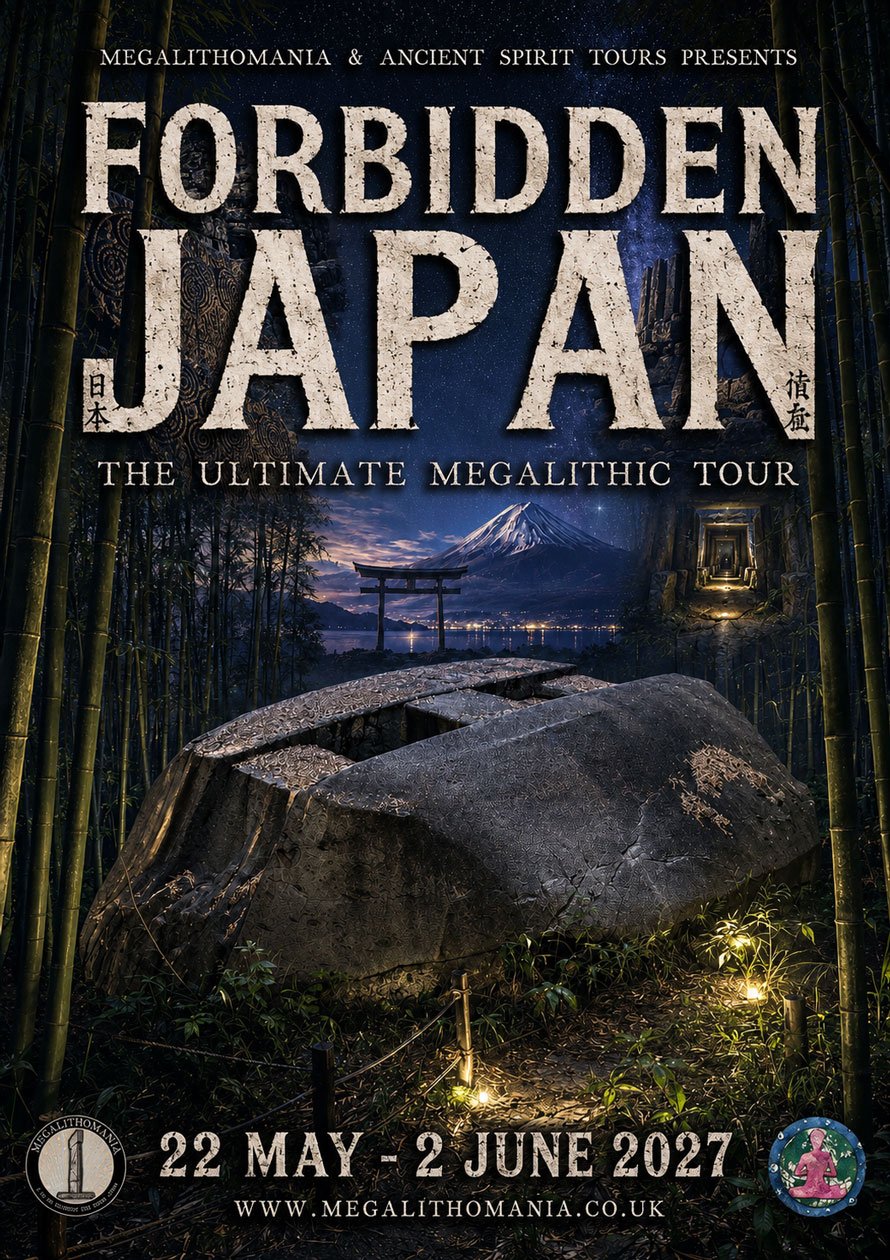
| MEGALITHOMANIA and ANCIENT SPIRIT TOURS Presents FORBIDDEN MEGALITHS - ANCIENT JAPAN TOUR 22 May - 2 June 2027 Prepare to challenge the traditional narrative of East Asian civilization. Join renowned researchers Hugh Newman, JJ Ainsworth and Enrico Gelain, on a 12-day deep dive into Japan’s most controversial and technologically baffling ancient sites. This isn't just a sightseeing tour; it is a forensic investigation into 800-ton precision-cut granite "floating" monoliths, and a shamanic pre-Imperial culture that official history has tried to ignore. From the "Rock Ships" of Asuka to the massive 150-ton stones of Osaka, and the monumental Kofuns of South Japan, we explore high-tech fingerprints of a lost megalithic world.
Day 1: May 22: Arrival in the Ancient Heartland Our journey begins with your arrival at Osaka Kansai Airport (KIX). We will board our private coach for a direct transfer to Asuka, the ritual landscape where Japan’s first Emperor is said to have descended from the heavens. Tonight, we gather for a welcome dinner at our hotel, situated at the foot of the sacred mountains, where Enrico will brief the group on the megalithic anomalies and "forbidden" archaeology we are about to witness over the coming days. Includes welcome dinner.
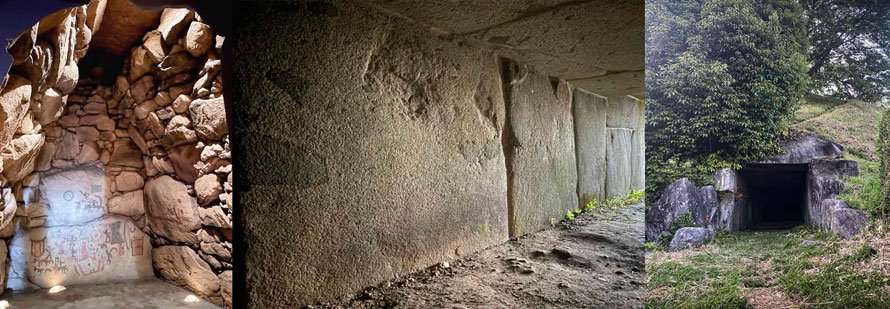
Day 2: May 23: The Astronomical Wonders of Asuka Today, we are going to explore the high-tech secrets of the Asuka Valley. Our morning starts at the Kitora Kofun, where we will witness a 7th-century astronomical ceiling map so precise it implies an advanced knowledge of the stars that predates local records. After a local lunch, we’ll move to the Asuka Historical National Park to visit the Mural Museum.
This will be followed by the Iwayama and Kengoshizuka Kofun tombs to examine the acoustic and structural properties of their massive stone chambers.
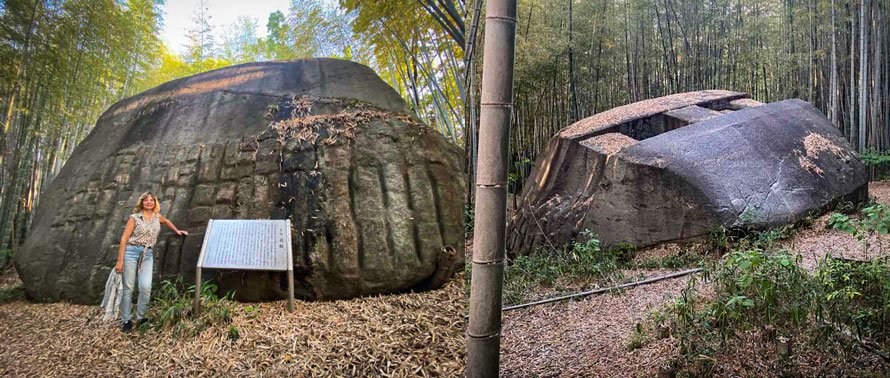
The day concludes at the Masuda Iwafune, a breathtaking 800-ton granite "Rock Ship" carved with surgical precision on a steep hillside—a site that defies any explanation involving primitive tools.
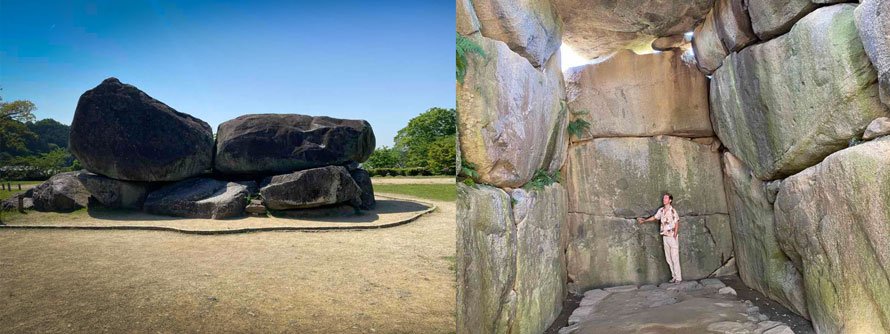
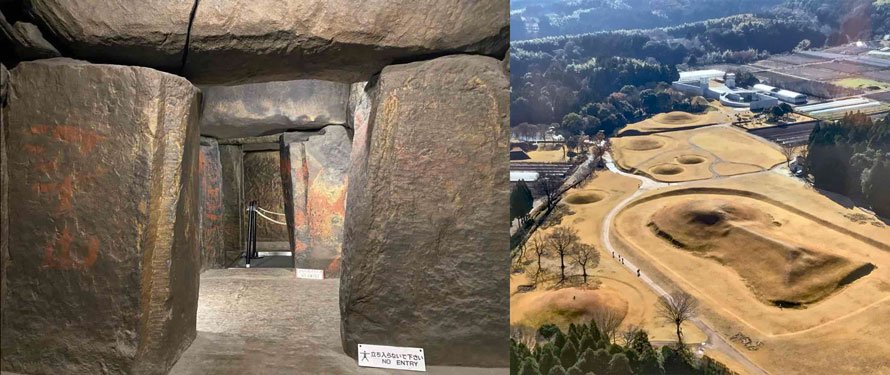
Day 3: May 24: The Devil’s Chopping Board & The Stone Stage After breakfast, we head into the Inabuchi Rice Fields to find the Maraishi Phallus Stone before ascending the Miyakozuka Tumulus, Japan’s mysterious "step pyramid." In the afternoon, we’ll move to the Ishibutai Kofun, a colossal 2,300-ton granite dolmen where we can stand inside the exposed chamber to feel the immense weight of the ceiling stones.
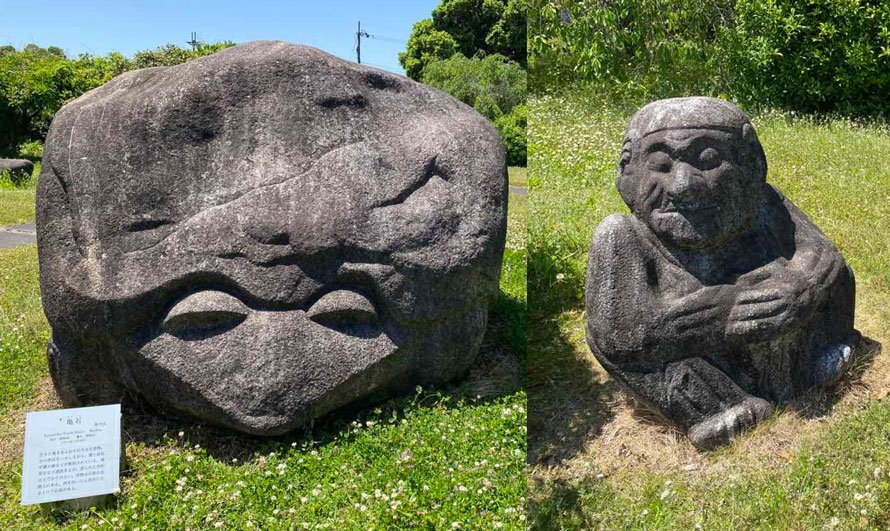
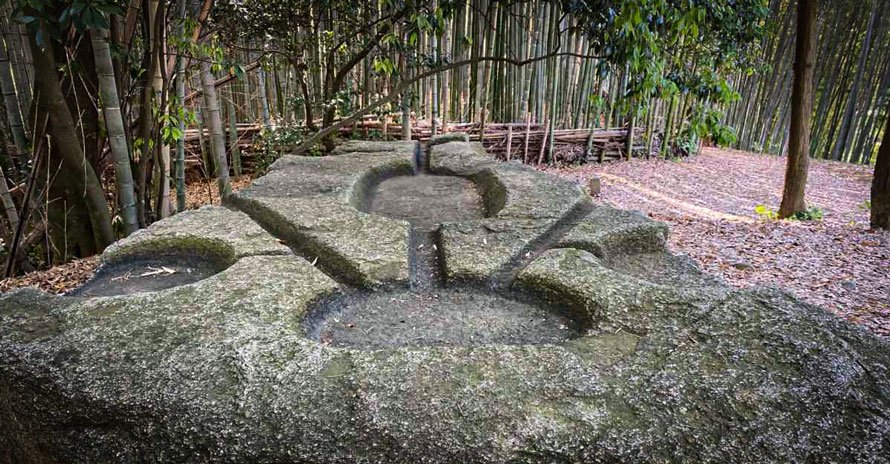
Nearby, we will investigate the Sakafune-ishi, a granite block with complex carved channels, and the Turtle Stone. A highlight of the day will be the Devil’s Chopping Board and its counterpart, the Devil’s Privy. These massive, precision-carved granite components look like parts of a dismantled ancient machine. We finish the day among the strange, alien-looking Saru-ishi "monkey stones."
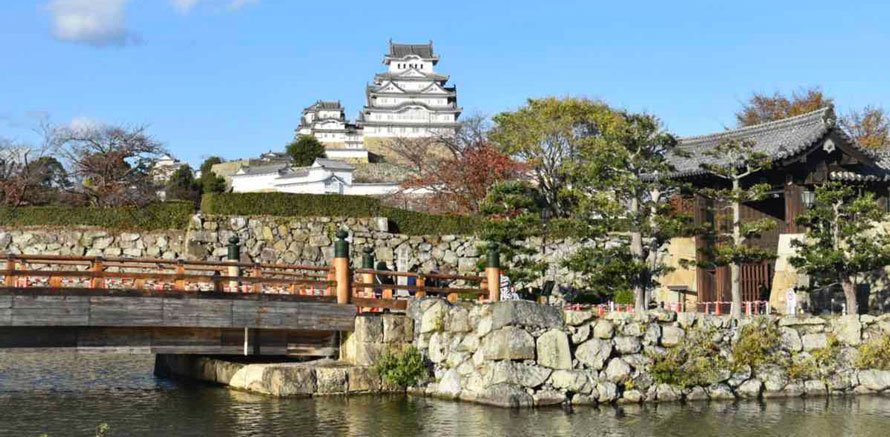
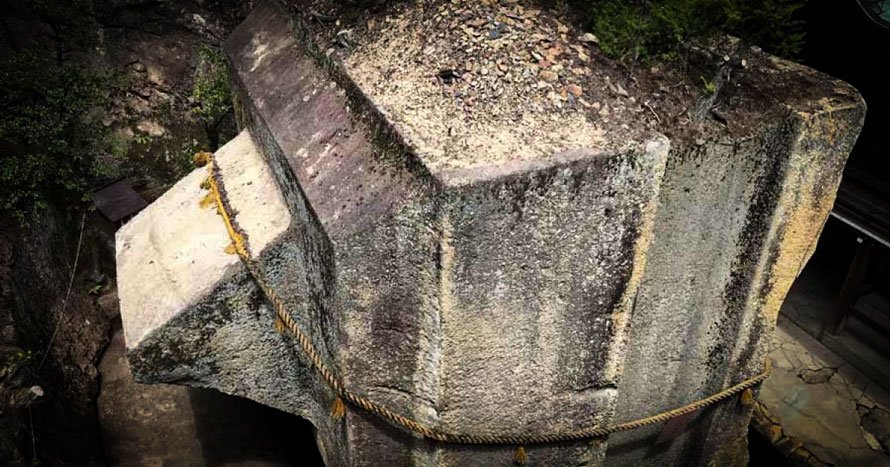
Day 4: May 25: The 500-Ton "Floating" Monolith In the morning, we travel to Himeji to visit the legendary Himeji Castle, a masterpiece of "defensive" architecture. However, the true megalithic mystery lies just a short drive away at Ishi no Hoden. We will explore this 500-ton monolith that appears to float in its own sanctuary pond; its sheer scale and "inverted" carving style suggest it was left unfinished by a pre-diluvian culture with advanced lifting capabilities. We round out the day at the Niizawa-senzuka mounds, where Roman and Persian glass artifacts were found, hinting at an ancient, interconnected global world.
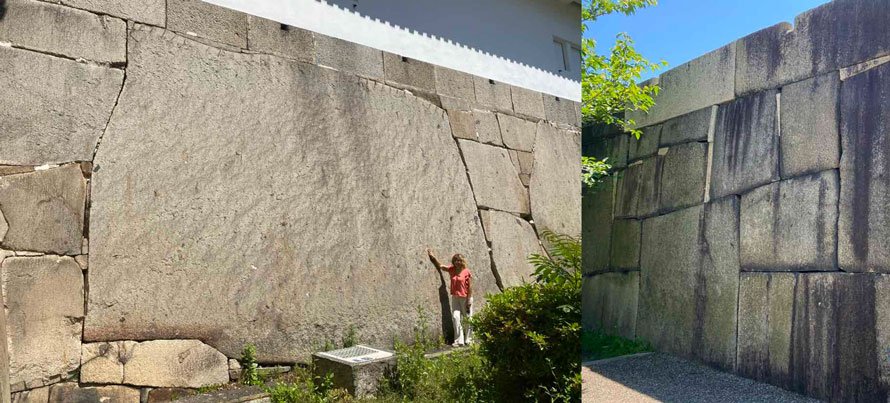
Day 5: May 26: The 150-Ton Megaliths of Osaka Today we continue our investigation by visiting the Asuka Historical Museum, where we will see the original artifacts and reconstructions that provide context to the anomalous stones we have seen in the valley. In the afternoon, we move to Osaka Castle to investigate some of the largest building blocks on the planet. We will stand before the world-famous Octopus Stone, a single granite slab with a surface of 60mq and weighing approximately 108 to 130 tonnes, and the even more massive Higo Stone, which is estimated at a staggering 120 to 150 tonnes, brought here by the Daimyo of Higo (modern-day Kumamoto), Kato Kiyomasa, a legendary castle builder known for transporting impossible megaliths. The sheer logistics of moving and fitting these stones into the castle's "unbreakable" walls remains a technical enigma. The last stone we’ll see here will be the Kimono Sleeve Stone of about 120tons.
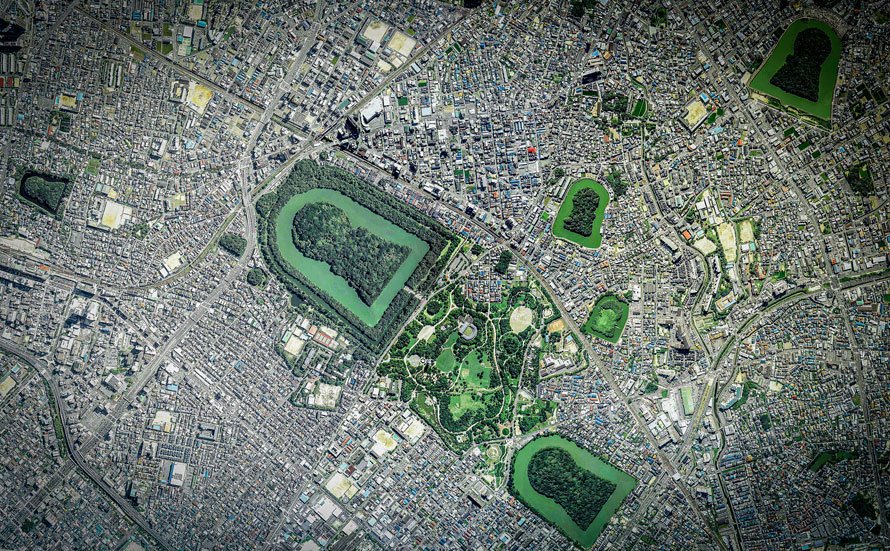
We conclude the day at the Daisen-ryo Kofun in Sakai, the world’s largest burial mound by surface area—a "Keyhole" mountain surrounded by moat of about 800 metres long, perfectly aligned to the cardinal directions.
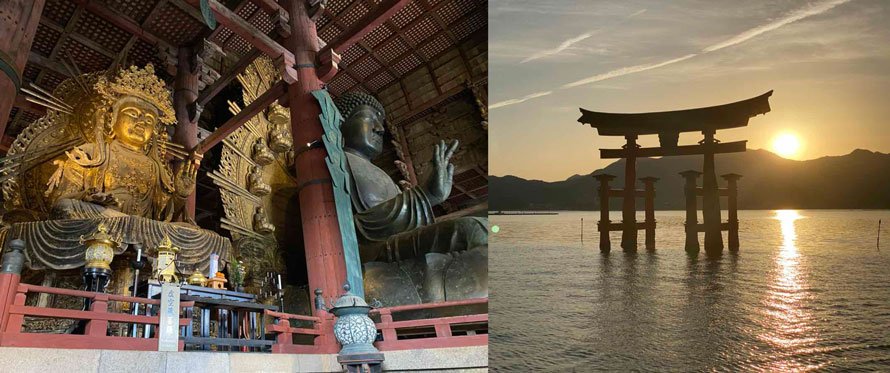
Day 6: May 27: Nara, the Thousand Torii Gates & The Old Kyoto Alleys
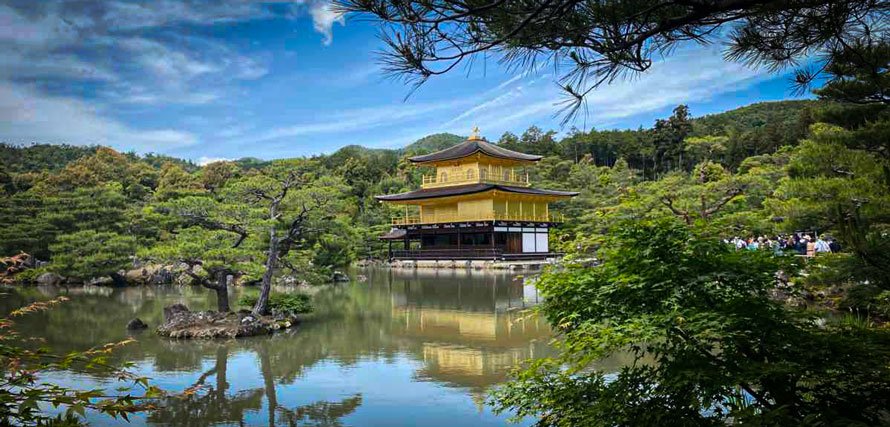
Day 7: May 28: Zen Precision We spend the day immersed in the spiritual geometry of Kyoto. We will explore the Kinkakuji Golden Pavilion and the Nijo Castle to see the evolution of Japanese craftsmanship. In the afternoon, we head to Arashiyama to walk the Tenryu-ji Zen gardens and the towering Bamboo Grove, together with the beautiful Saihoji Japanese Gardens. In the evening, we catch our flight from Osaka (ITM) to Fukuoka to begin our Kyushu southern island expedition.
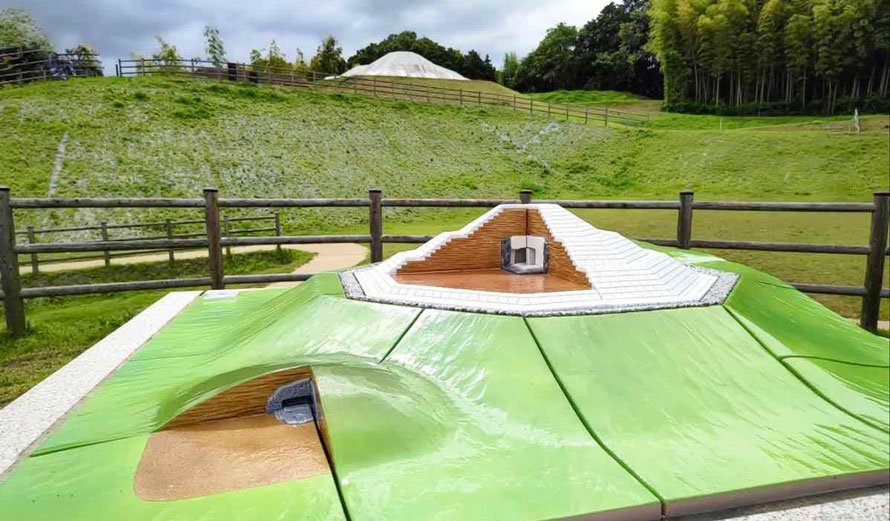
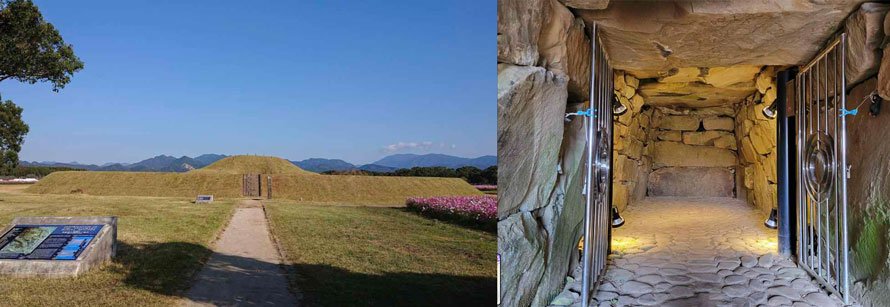
Day 8: May 29: The Kogoishi "Korean" Polygonal Walls Today we explore the Goroyama and the Iwatoyama Kofuns, in the first site we can visit a small museum too and enter a 100% scale reproduction of it. can In the afternoon, we move to Zoyama Kogoishi to walk the 3-kilometer mountain perimeter wall. This site features polygonal masonry strikingly similar to the megalithic walls of Peru and Greece, suggesting a global seafaring culture in the remote past. Labelled by archaeologists as "Korean Castles", the most famous Kogoishi sites in Kyushu island are 16 and they all perimeter the base of some mountains, built in Japan with a Korean-style technology to "defend" from a possible attack from China through Corea that never happened. Actually, no mention of its construction exists in the Nihon Shoki, the Japan’s oldest official history record, which is highly unusual for a project of this scale. This suggests it was already "ancient" and "forgotten" by the 700s AD. All of them feature many polygonal "drain gates" to allow massive amount of water to flow down the mountain without the structure of the wall being damaged. Some similar Kogoishi sites in Japan reach 4km stone walls in length around the mountains, meanwhile others surrounded an ancient lake created by the drain gates, the biggest and ancient megalithic "dam" project in the world ever discovered at the moment.
Day 9: May 30: Painted Kofuns and giant Statue Menhirs Today we enter the realm of Japan's decorated tombs and Japan’s most ancient "Dolmen" culture. We have a special limited entrance inside the Chibusan Kofun, where the interior murals depict a mysterious radiate "being" with its hands raised, surrounded by geometric codes. We will then visit the Kumamoto Burial Museum to enter inside the 7 exact replicas of all the kofun burial around the area with painted hidden murals.
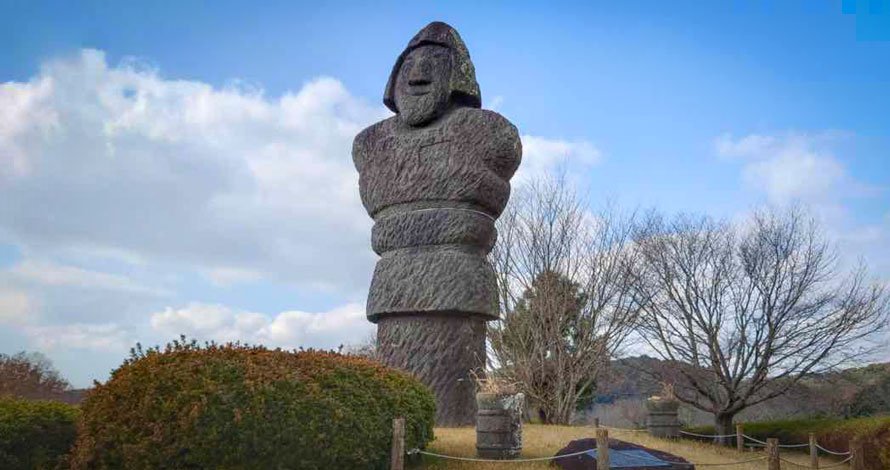
We then explore the Eta Funayama Tumulus and Park, where together with the 18 statue-menhir replicas coming from all the sites in the neighbouring areas, we will stand before the incredible 5-metre-high Statue Menhir coming from Chibusan Kofun, a towering stone sentinel that dwarfs the typical figures found elsewhere in Japan. Then we’ll begin our transition toward the southern coast of Kyushu, exploring the transition between the Yamaga/Kumamoto burial cultures and the massive complexes of Miyazaki. As we move through this sacred landscape, Enrico will discuss the "Land of the Sun" and its solar alignments. We will arrive in the evening at our resort in Miyazaki to prepare for the massive clusters awaiting us tomorrow.
Today we are going to immerse ourselves in the massive Saitobaru Kofun cluster, where over 300 mounds dominate the landscape in a display of repetitive geometric power. In the afternoon, we’ll move to and explore Ikime Kofun Park, home to some of the largest and most impressive keyhole tombs in Kyushu. We will examine the precise engineering of these massive earthworks before heading to Miyazaki Airport (KMI) for our flight to Tokyo Haneda. Upon arrival, we check into our hotel in the heart of the modern metropolis, ready for our grand finale.
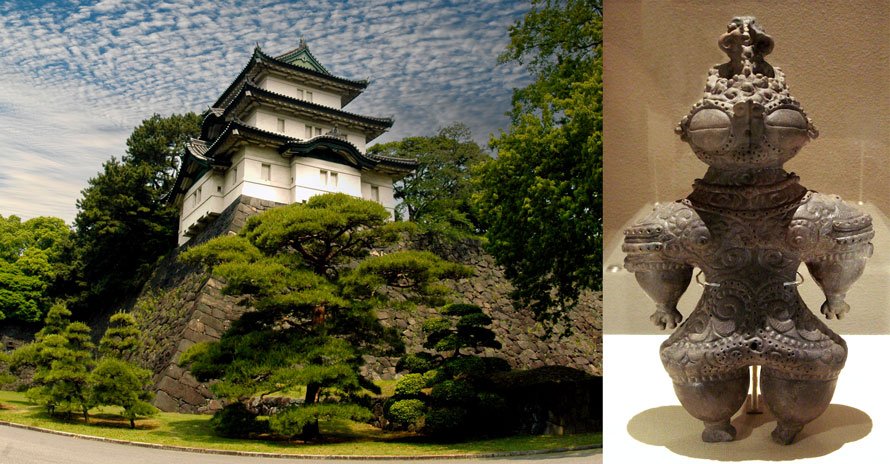
Day 11: June 1: Tokyo Exploration We conclude our journey at the Imperial Palace (the former Edo Castle), exploring the massive stone foundations that once supported the Shogun's power. We will spend our final hours together at the Tokyo National Museum. Enrico will lead us through the Archaeology Gallery to see the original "Dogu" figurines —the bug-eyed, "space-suit" wearing idols of the Jomon era—the perfect conclusion to our search for Japan’s forgotten origins. Farewell Dinner.
Day 12: June 2: End of Tour Drop-off at Haneda Airport for your flights home
BOOK OTHER 2026-2027 TOURS |
.jpg)